
Science that informs. Collaboration that scales.
A Consortium at Colorado State University bringing sectors together to strengthen the modeling and data foundations that drive thriving agricultural ecosystems and communities.
Model Agroecosystem Outcomes Based on Decades of Peer-Reviewed Science
Run DayCent and MEMS locally or seamlessly integrate via our cloud-ready API. Simulate soil carbon and nitrogen, greenhouse gas fluxes, and crop dynamics across land management scenarios, regional soil profiles, and cropping systems.
Explore the ModelsAccess Gold-Standard Agroecosystem Datasets
Over 12,000 harmonized field points available for download. Each dataset undergoes a thorough quality control pass with standardized metadata, ready for discovery, calibration, and benchmarking.
Browse Data Products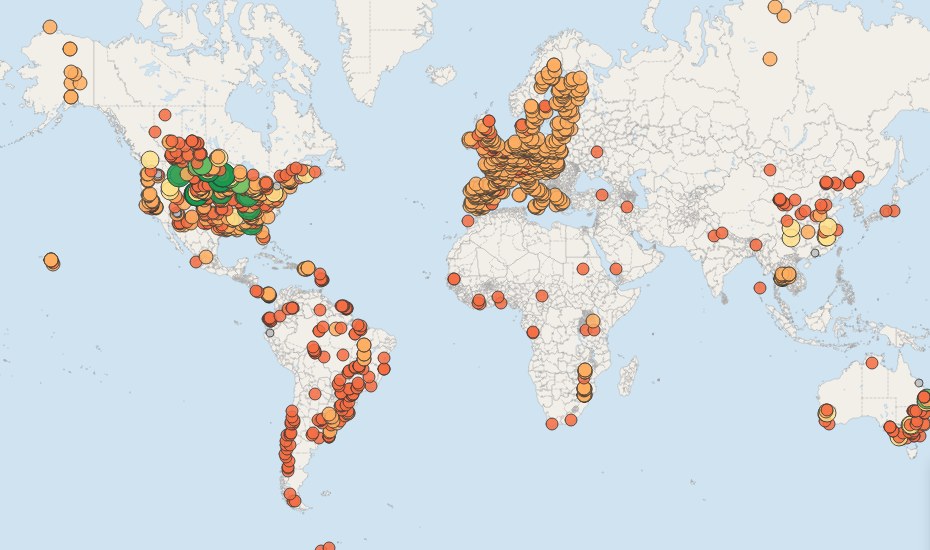
Master DayCent, MEMS, and uncertainty with cohort-based learning
Hands-on cohorts in DayCent and MEMS, along with a specialized curriculum on uncertainty analysis, build technical capacity and support transparent and repeatable modeling standards.
Find a Training Cohort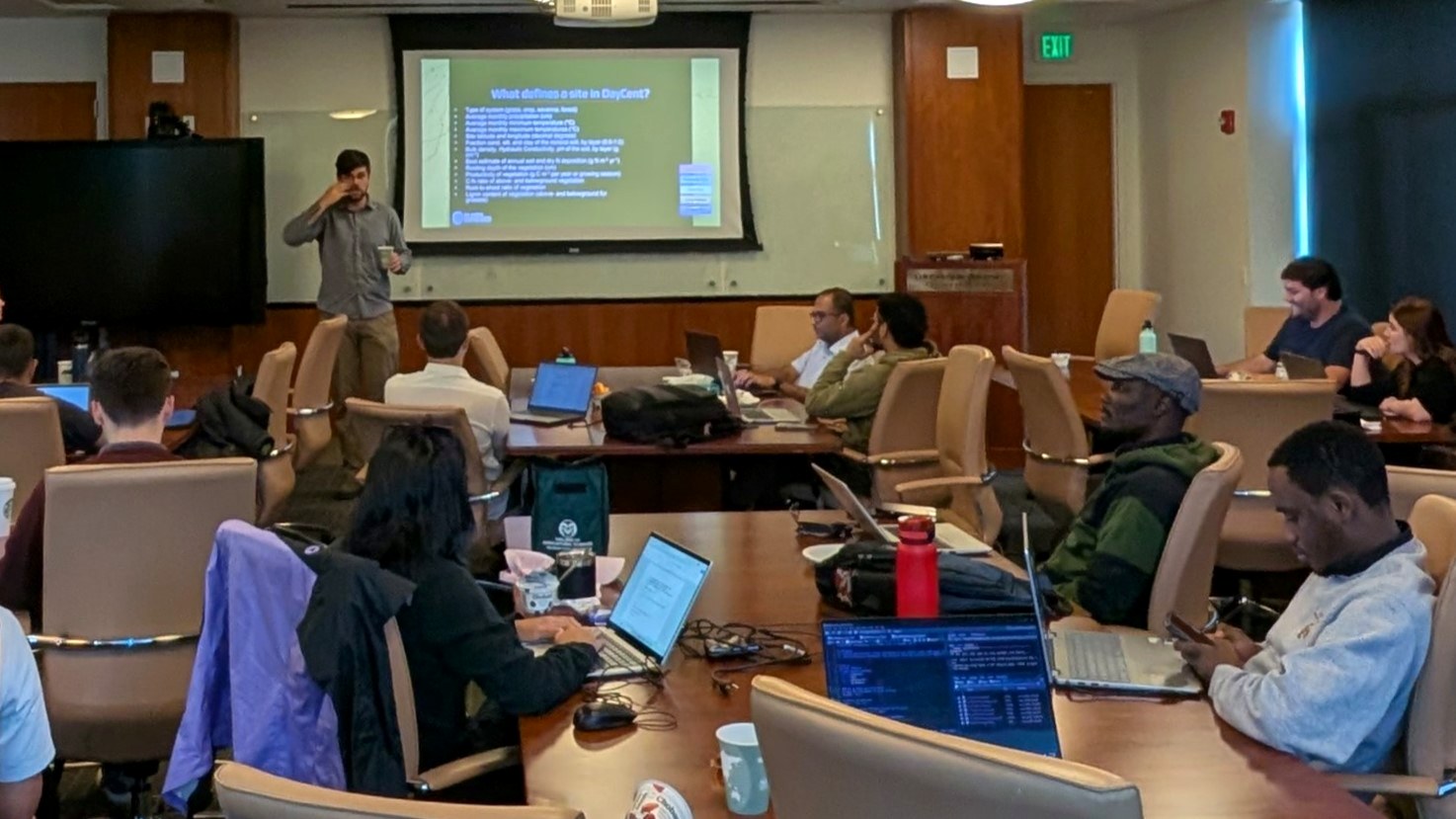
Connect with the Community Advancing Agroecosystem Science
From our annual in-person meeting in Fort Collins to field tours, webinars, and working groups, we bring together academia, non-profits, and industry to strengthen the collective practice of ecosystem science.
Join Us at Upcoming Events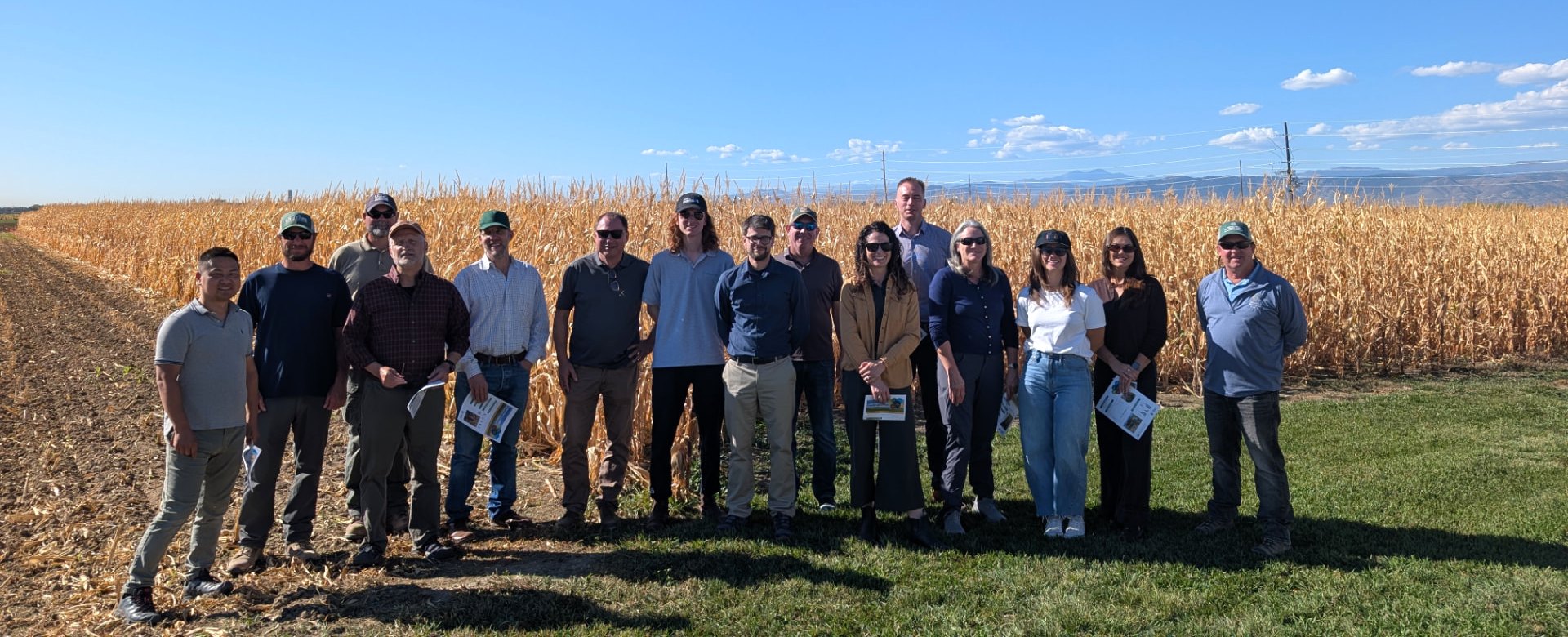
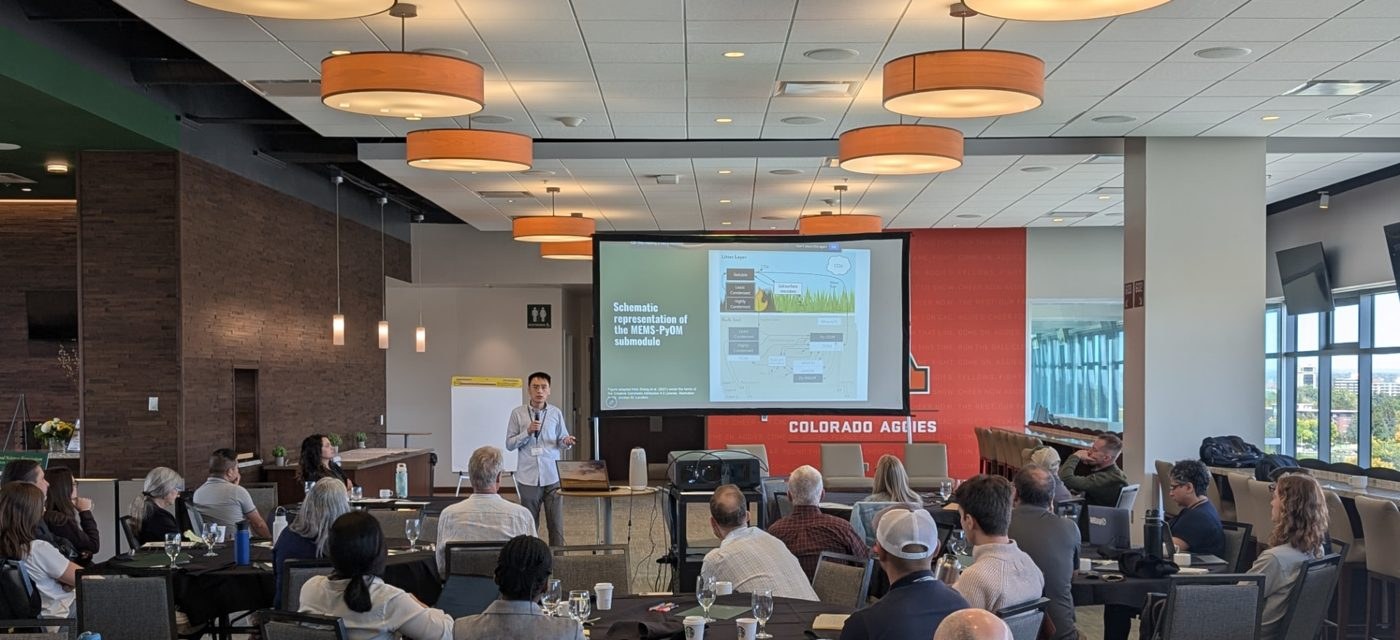
A Community Behind the Science
What happens when the science behind land stewardship is open to researchers and ready to work at commercial scale? Across more than 30 institutions and six countries, the LandEngine at Colorado State University brings together researchers, non-profits, and industry partners to address shared challenges in modeling and data. Support for ongoing model development to better represent the diversity of real-world agricultural systems and management practices.
Process-based modeling
Transparent, peer-reviewed ecosystem models developed at Colorado State University and accessible to the global community.
Rigorous data framework
Strengthening the empirical foundations and standardized metadata that allow real-world observations to support robust modeling.
Cross-sector community
Hands-on training, working groups, and cross-sector events where academic, NGO, and industry practitioners learn and collaborate together.
Our member organizations
Over 30 member institutions across 6 countries working together to advance ecosystem science and support nature-based solutions.
Commercial






Non-profit







Academic